


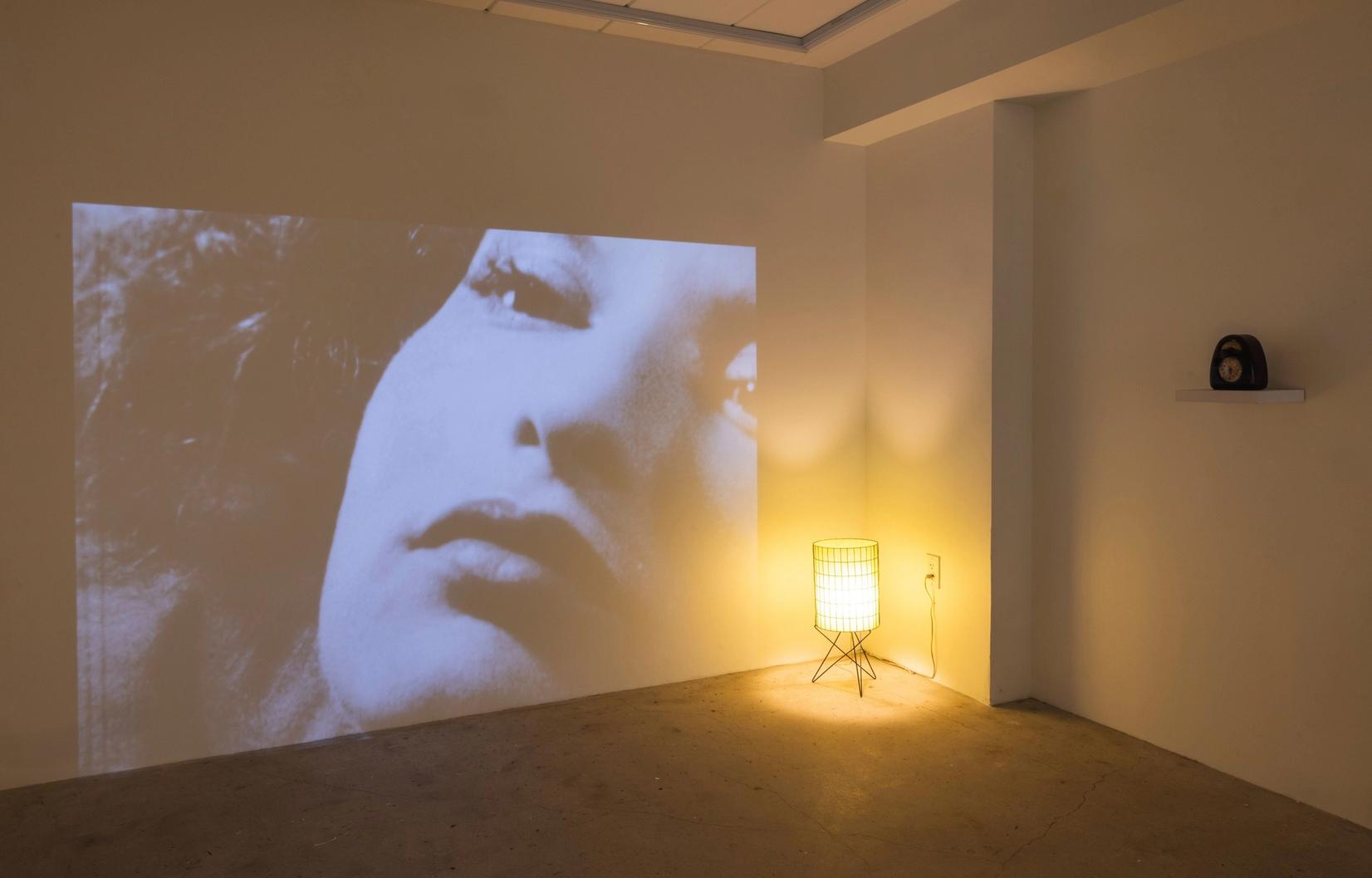
In 1941, twenty-one-year-old Elizabeth “Betty” Rockwell returned to Pittsburgh from Sarah Lawrence College with an improbable proposition: that her industrial hometown needed a gallery devoted to modern art. With a $1,000 graduation gift in hand, she opened Outlines at 341 Boulevard of the Allies, a downtown thoroughfare. Over the next six years, exhibitions at Outlines would include artists now firmly embedded in the canon of twentieth-century art, among them Alexander Calder, Joseph Cornell, Isamu Noguchi, and Anni Albers. Yet the famous names risk obscuring what was most unusual about Outlines. Rockwell imagined the gallery as something closer to a cultural laboratory, extending beyond exhibitions into lectures, concerts, film screenings, seminars, and a public library.
This innovative and expansive model is the subject of Things to Come: OUTLINES, 1941–1947, a multi-part exhibition series curated by Margaret Kross and Brittany Reilly at Romance, in Pittsburgh’s Oakland neighborhood, this past spring and summer. Through three discrete exhibitions and related programming, Things to Come introduced Outlines to present-day audiences and interrogated its approach, asking what aspects of Rockwell’s vision still feel useful, or perhaps unresolved.
All three of the series’ exhibitions have paired archival material and historical artworks related to the gallery with work by contemporary artists active today. The first, Meshes and Designs, echoed Outlines’ inaugural exhibition, Traces and Designs, and brought works associated with the gallery into conversation with Maya Deren’s experimental film Meshes of the Afternoon (1943). The second, Archive Theater, turned to Outlines’ surviving scrapbooks and works on paper by artists including Stanley William Hayter, Balcomb Greene, and Irene Rice Pereira, placing abstraction alongside films concerned with movement. The last of these, and the main subject of this text, was grand illusion, on view through August 29.
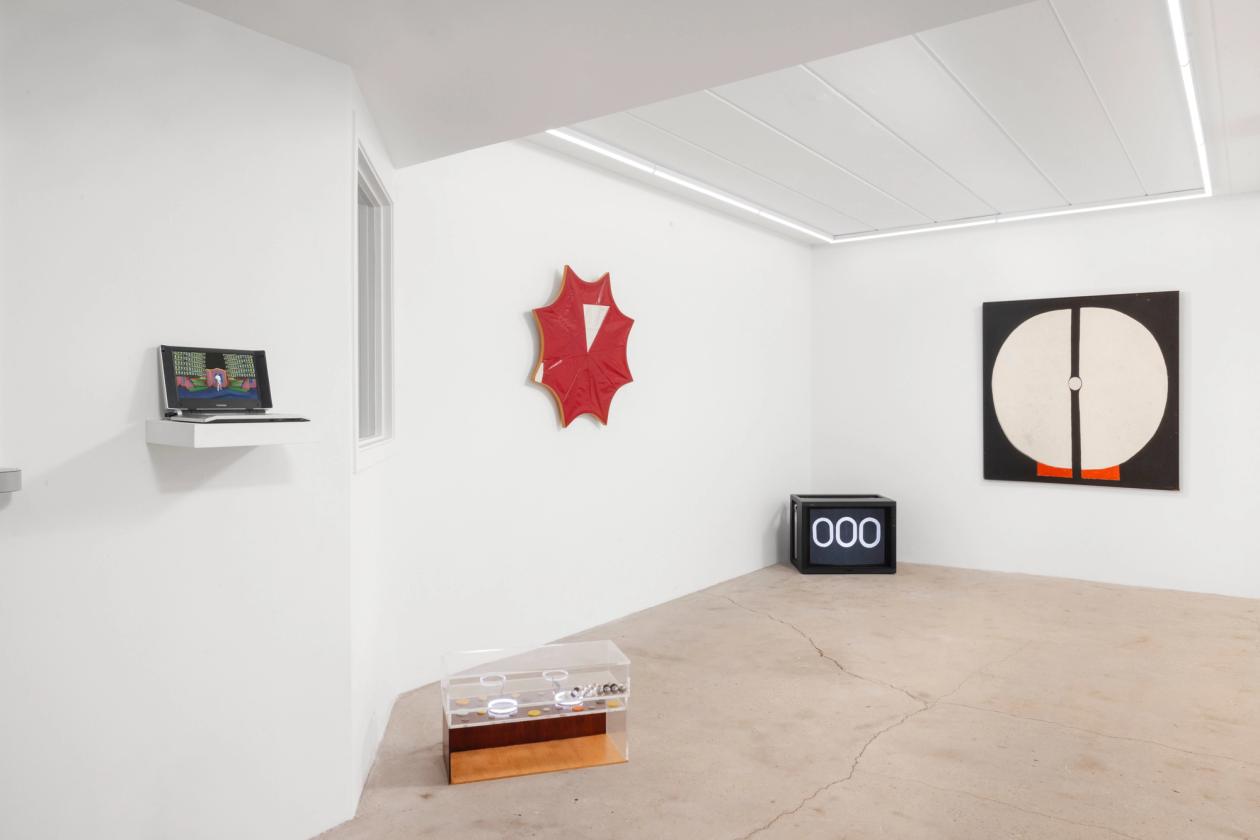
grand illusion takes its title from Jean Renoir’s 1937 antiwar film La Grande Illusion, which Rockwell screened at Outlines in March 1942. Renoir’s film questions the ideals of solidarity and honor under the pressures of war. The exhibition extends that skepticism to modernism’s own promises of progress and rational order for a better-designed future. Its forms persist even as the ideals attached to them have grown harder to sustain. Fernand Léger’s Ballet Mécanique (1924), another film screened at Outlines, supplies something like its visual grammar: wheels, gears, repetition, mechanical movement, and the seductive fantasy that disorder might be engineered into coherence.
In the contemporary exhibition, modernism’s formal vocabulary turned into material for estrangement, presenting multiple works in the gallery’s modest space: Teak Ramos’s A – The Indissoluble Girl (2026), a starburst relief informed by antique parasol patterns, turns geometric order into an invented emblem. Brianna Perry’s 60 cents (2025) literalizes painting’s relation to value with two quarters and a dime embedded in a checkerboard surface.
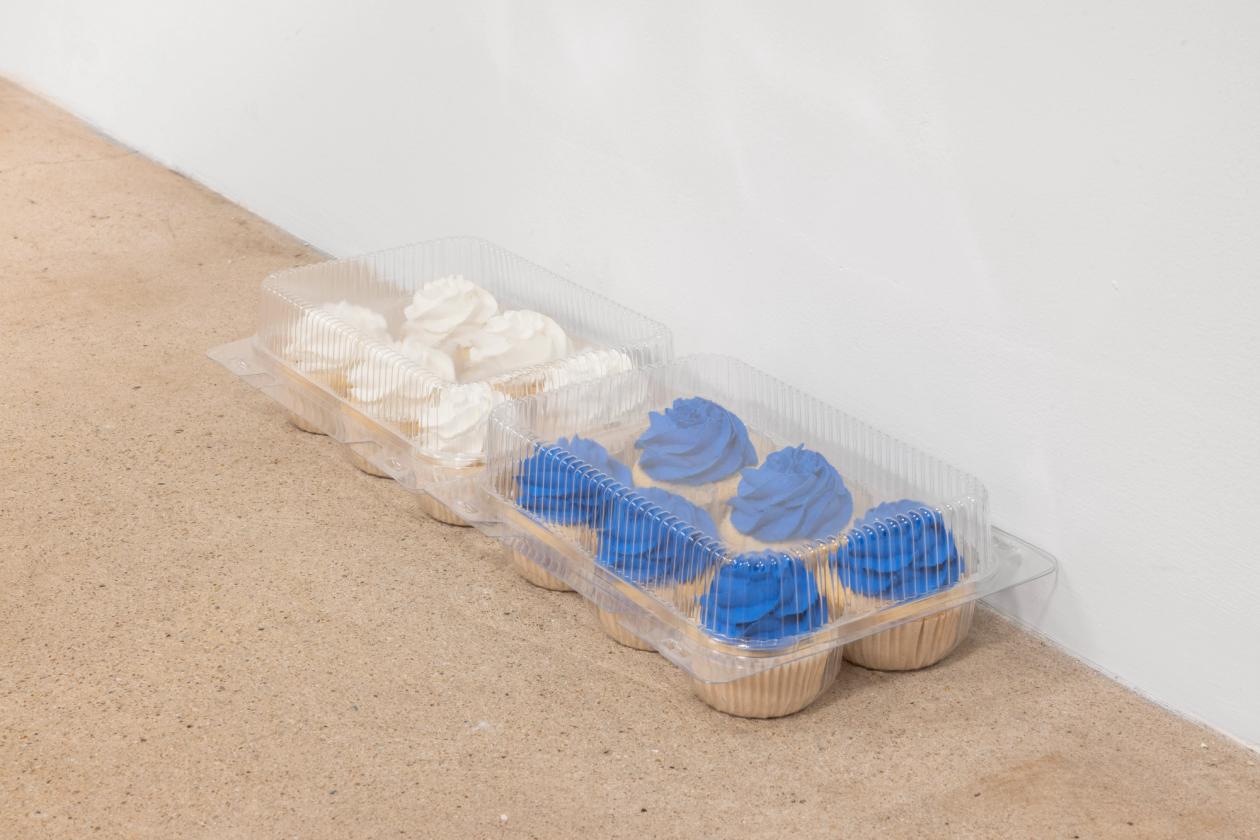
Sophie Kovel’s 56 Years of Tripp Lite (2023) recasts corporate ephemera in Yves Klein blue, rendering cupcakes and company drinkware in a color associated with modernist experimentation. Jasmine Gregory’s Bundle no. (“Whatever the next number is”) (2026) buries expressive gestures beneath plastic and tinsel, obscuring the marks of the artist’s hand.
Lastly, Paul Pfeiffer pushes this logic into televised spectacle. In Desiderata (2004), television footage from The Price Is Right is stripped of its cash rewards, leaving the show’s familiar machinery of winning suspended. Its brightly lit game-show world persists, even as the promise at its center disappears.
Estrangement takes on a different charge in Louise Pershing’s painting Inner Bound (1950s), a square composition built around a tightly organized circular abstraction. Pershing, a Pittsburgh-based artist and designer who exhibited at Outlines in 1942 as part of the group exhibition Pittsburgh Moderns, had a history of painting industrial scenes of the city before she moved toward color-block abstraction and softened edges. Here, her tightly organized color and the mechanical associations effectively bridge those two aspects of her practice and serve as a connective tissue for the historical and contemporary halves of grand illusion. Seen among newer works that approach abstraction with varying degrees of skepticism and irony, its strange circular form—part cog, part halo, part celestial body—feels unsettled, as if interiority were inseparable from infrastructural and cosmic forces. It seems to say that the future modernism once imagined has already arrived; what remains are its shapes.
Those shapes had particular resonance in industrial Pittsburgh. Product photographs from Rockwell Manufacturing, one of the industrial companies developed by Betty Rockwell’s father, Willard Rockwell, show valves and drills suspended against commercial backdrops, their utilitarian forms transformed into immaculate visual arrangements. Made by commercial photographers Royal Kane and Harold Corsini, the images in grand illusion repeat these objects until they approach abstraction. Their inclusion in this exhibition alludes to the ways Outlines’ location in Western Pennsylvania was far from arbitrary. In Pittsburgh, the formal language of modernism already resonated with the visual culture of industry. Geometry, repetition, machinery, and engineered form were woven into the city’s built and commercial landscape.
But Outlines deserves more than a designation as Pittsburgh’s first avant-garde gallery. Its significance lies in the alternative cultural infrastructure Rockwell attempted to build, in which exhibiting art was only one component of a larger intellectual and social landscape. In fact, the gallery’s educational ambitions were inseparable from its exhibition program. Romance’s public programs brought the importance of education at Outlines into sharper focus. Lectures by curator Brittany Reilly and Chicago-based interdisciplinary artist Max Guy offered a broader history of Outlines and a reflection on the intersections between history, nostalgia, and the present. A sound performance by hellmouth (Michael DeMaio and Ang Ziqi Zhang) and a showcase of work in progress by Justin Emmanuel Dumas brought the program into even more participatory territory. Earlier this summer, Harrison Kinnane Smith presented a site-specific talk on 110 9th St., a conceptual project engaging public art, property law, and Pittsburgh’s racialized urban history. In pushing the exhibition beyond the gallery walls, Smith’s lecture underscored the broader ambitions of the series, where historical research is a method for looking more closely at the city in the present. Indeed, Romance’s project is most compelling in its consideration of Rockwell’s ambition to build a gallery around the idea that gathering to look at art, watch films, listen to lectures, read, and converse belonged to the same ecosystem. The boundaries among those functions were porous for Rockwell, and Things to Come suggests that they might productively become porous again.
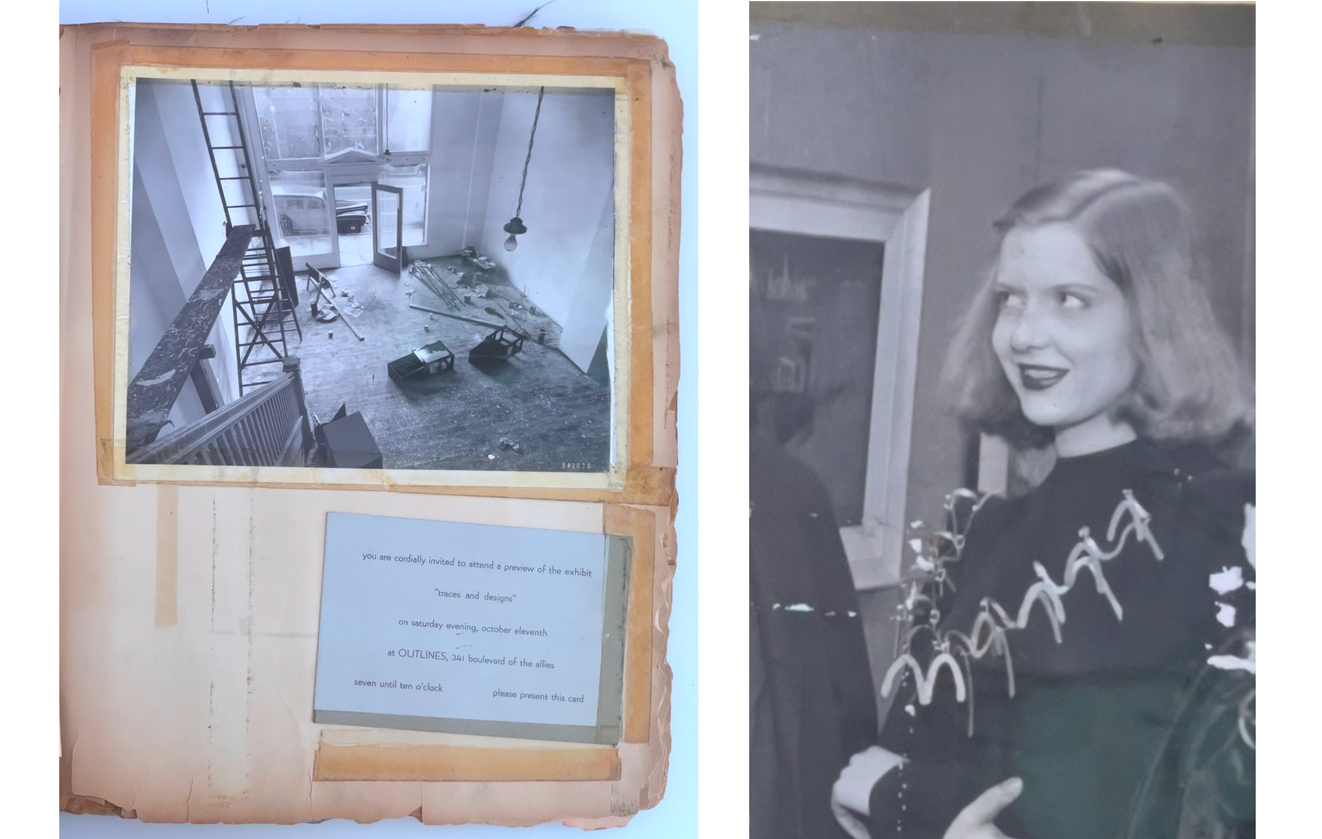
Even though Outlines lasted only six years, its brief life belies the scale of Rockwell’s ambitions. What little material survives was pieced together from Rockwell’s personal scrapbooks and recollections. The titles of archival press clippings on view at Romance offered historical texture of how Outlines appeared in its moment:
“Girl Tries Modern Art On in Pittsburgh.”
“Society Girl Opens Gallery.”
“Girl Puts $1,000 ‘Bet’ on Public’s Liking for Modern Art.”
The coverage repeatedly casts both Rockwell and the gallery as curiosities, while treating the city’s receptiveness to modernism as an open question. Eighty-five years later, grand illusion revisits the question from a different perspective, asking what remains of modernism once its forms have outlasted the ideals attached to them.
