


An accurate description of summer in Detroit—or five words used by artist Daniel Ribar and curator Katy Kim to help mold his solo exhibition, One Time at a Day. The show marks the unofficial grand opening of Middle Gray, which is putting itself on the map—in alignment with other notable venues like the Shepherd—as part of Detroit’s Little Village neighborhood. Founded by artist Romeo Okwara, the space is a multifunctional hub, housing a darkroom, digital printing lab, artist residency, and gallery. Responding to a need for comprehensive art spaces that specifically cater to photographers, Middle Gray is carving out a new niche in Detroit through its programming and active engagement with other lens-based artists in the community, promoting discourse around the history of photography and where it’s headed.
The current exhibition implements Okwara’s mission with a key ingredient: speed. Ribar’s paintings, sculptures, and photographs are installed throughout the inside and outside of Middle Gray, a house that has been converted into a versatile locus. While the materials vary (firework soot, spray paint, utility pole, aluminum, lawn chairs, archival prints), the aura is constant; a soft tension. In this show, Ribar’s photographic roots are clear, while also revealing more of the artist’s recent developments in sculptural media, painting, and installation. Moments are carefully stacked on top of each other like souvenirs from times you don’t remember (e.g., Mike). In other works like Wrist Rocket, invisible acts of violence penetrate energy fields like a dark cloud, looming. The work emits motion, but not the obvious kind—more like smoke seeping under a door or a melting popsicle dripping onto the cement underneath you. Some signs don’t always stand out at first, but once you see them, they permanently shift to the foreground of your brain. The phenomenon of suspension and lost time perpetuates a continuous flow, an open loop.
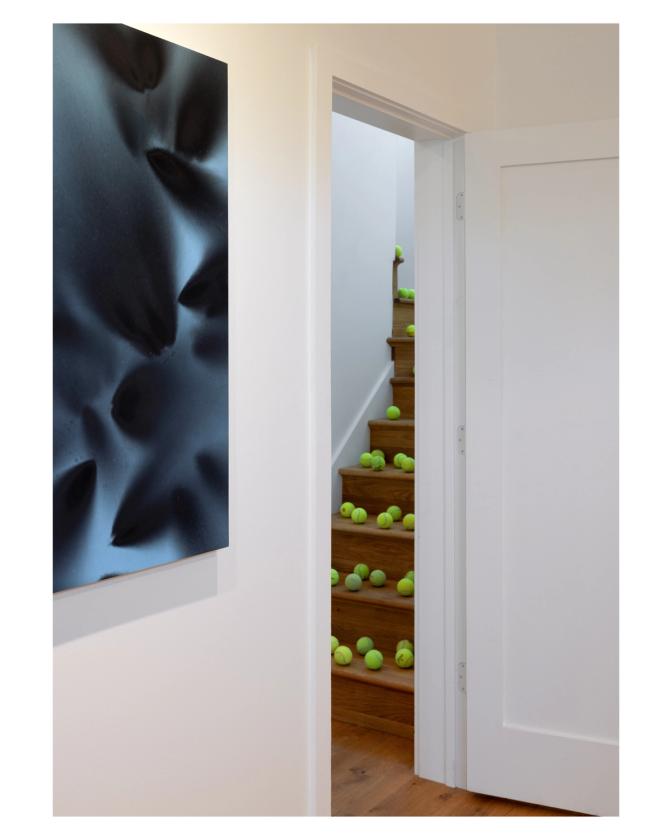
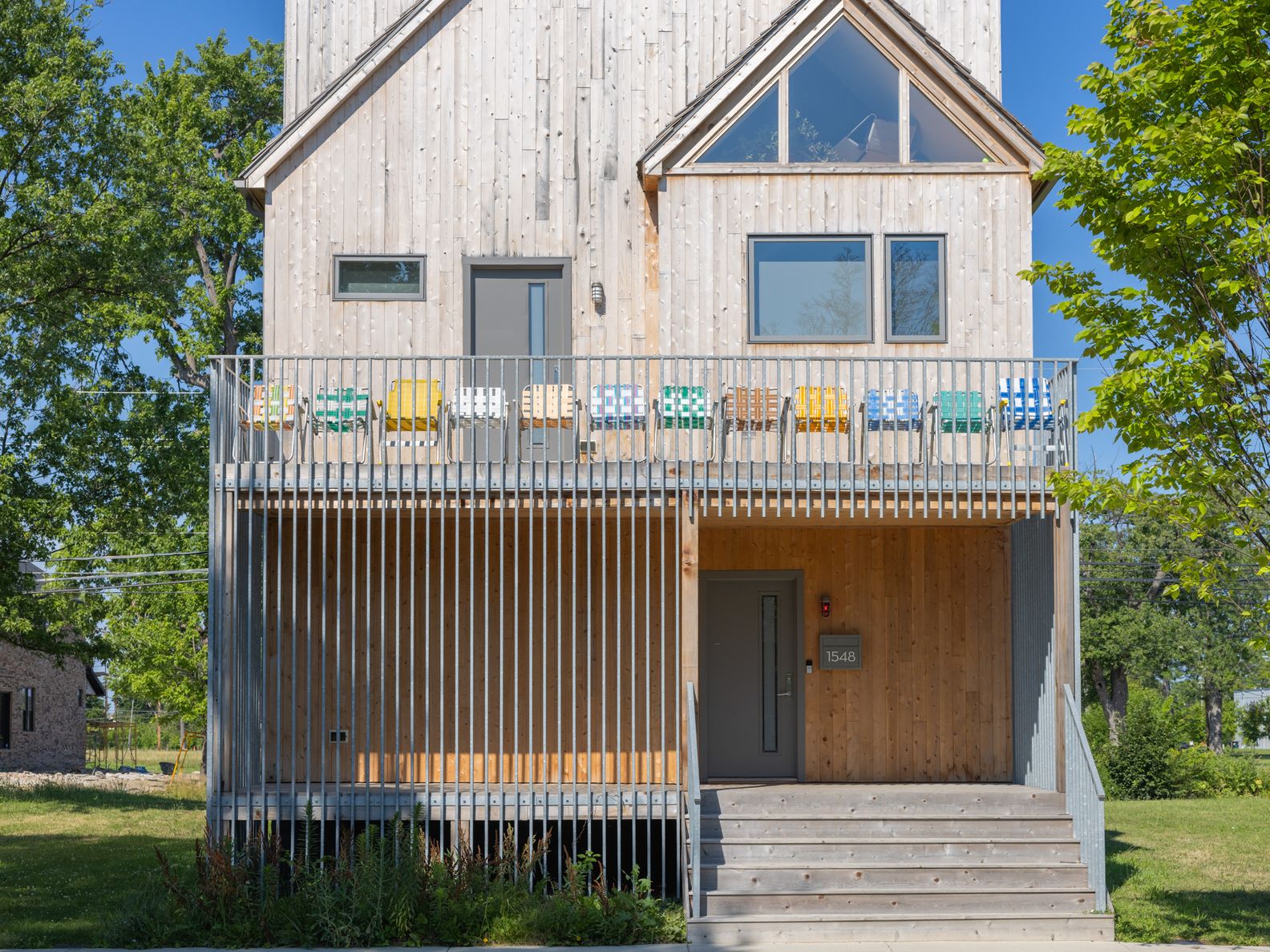
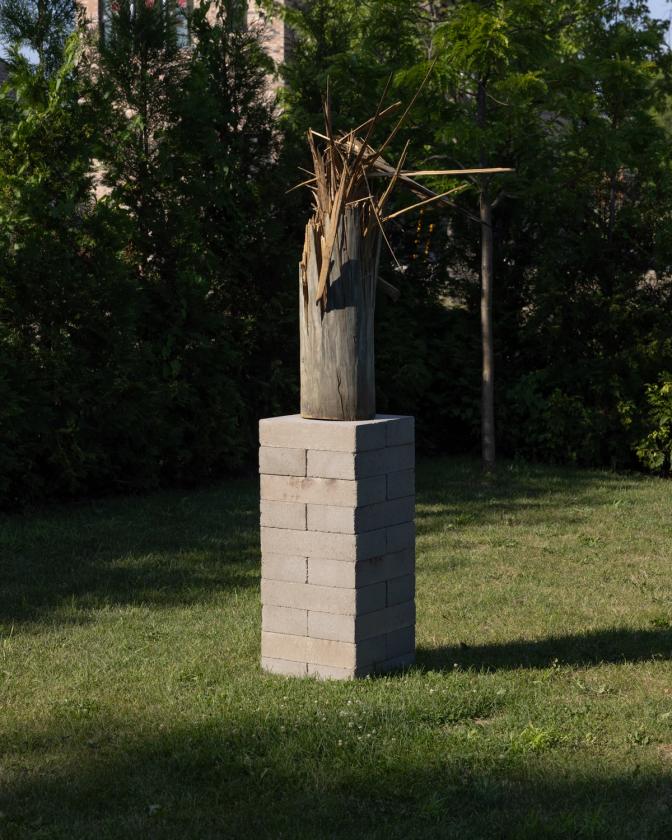
From the moment of arrival, a row of empty lawn chairs stands alone on the balcony, looking down on the viewer in a welcoming gesture (a variation on a previous piece in Ribar’s repertoire, 25 Chairs). You are put into perspective—a ripple in the wave, and a rhythm is established. Inside, the atmosphere is calm, but the objects demonstrate a struggle between dominion and escape. In the main gallery, crisp photos act as the border for abstract spray paint works, like a shell holding in soft tissue. A blue inverted photograph mesmerizes, showing a glowing butterfly in a cave of hands, nestled by a shadow halo. Citgo morphs as you adjust your perspective; coming closer, its dimensionality becomes sharply apparent, evoking the energy of the city in the gas station logo’s iconic, familiar shape. The installation continues outside, where the mangled remains of a utility pole take center stage, its splinters blowing in the wind, gently framed by the neat rows of arborvitae trees on the yard’s perimeter. Buzzing iridescent beetles and black butterflies disperse into the empty alleyway and open field surrounding, further enhancing the kinetic substance of the sculpture.
There is a constant game of movement versus stillness at play, with illusory glimpses of protrusion. The artist and I talk about the circulation of things—drifting, how garbage always finds its way into our yards, no matter how hard we try to build barriers. The process of clearing it out becomes a ritual—patterns on patterns, a collective experience. Perhaps the same concept reveals itself in the essence of the work—parts of outside are constantly leaking in, like stitches of other dimensions. The question that remains: How do we hold what sticks?
