


There’s no great romance behind my arrival in Cleveland twenty-something years ago. My family base in Ohio was largely disbanded when my mom ran off west to live on the Zuni Pueblo. I was homeschooled and finished early, so I set off on my own to travel and be an artist. I ran out of money and needed someplace to go. I wanted to study art, but I hated school, so I didn’t put a lot of effort into it. I only applied to the Cleveland Institute of Art, and they accepted me with what seemed a decent scholarship, so I went there.
Cleveland was raw and real. I loved the light and spaces, and the brutality of the city.
It was barren, yet vital—a hideous beast, mortally wounded, mutated and contaminated, kept alive through daily trial and error by its inhabitants, who poked and prodded at the carcass, making love among its decay. There were wild, underground scenes for art and music, and drugs. It was perfect for a young artist to go to work. There were warehouses and threadbare apartments available for a few hundred dollars a month. Many things were possible with little money or credentials.
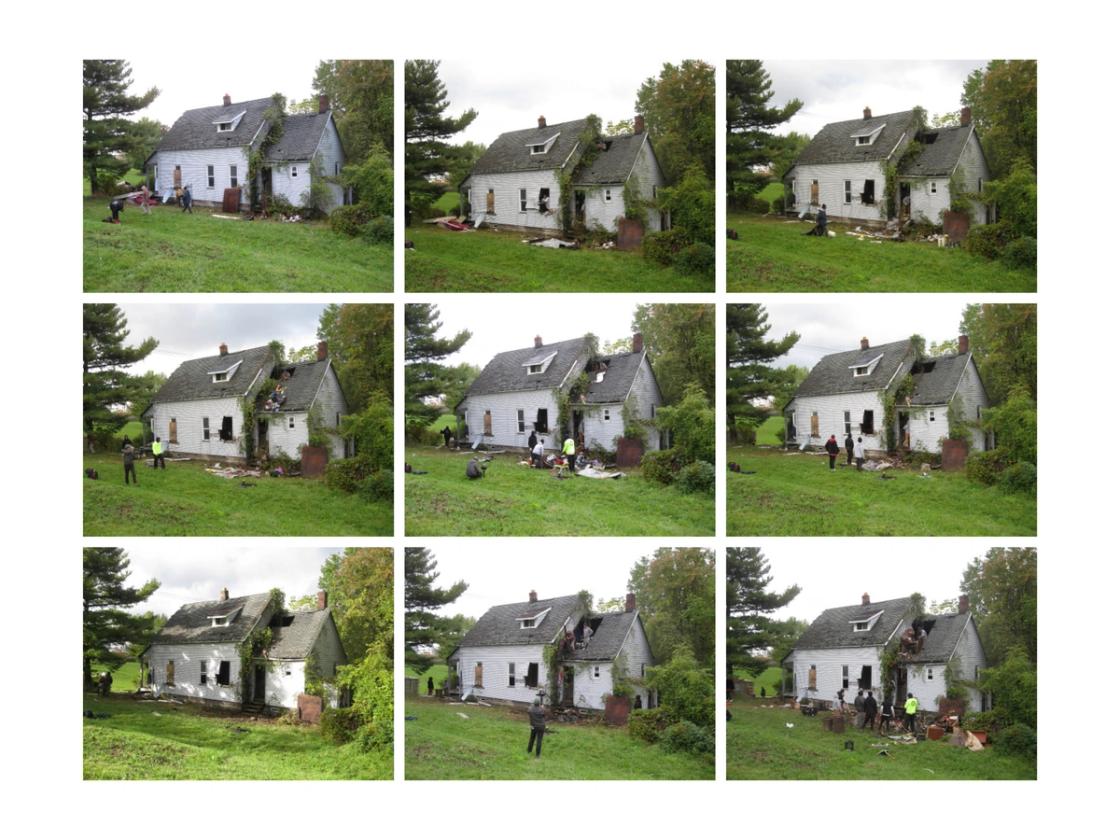
I started my first gallery in 2017 as a grad student at the University of Illinois. It was called Accord LX Projects, and it took place in my 1993 Honda Accord. I was moving around without a permanent home, traveling the country with Lula, my Great Dane, landing in Cleveland in between visits to other cities. Accord LX only did a few projects, and the police showed up for the first experiment on campus. It turned me on to curating and organizing exhibitions and experiments with artists, but doing it in a way that was inherently disruptive and unstable. The car could be pulled up in places it didn’t belong, making interventions in parking lots and street corners.
Later that year, when Gabi and I got together in Cleveland, we started doing that. She had more formal training in curation and exhibition practices than I did, but we were both interested in the soft boundaries between public and private life. We moved to Miami, New Orleans, and Wisconsin, intervening along the way.
SHED Projects became our home institution of contemporary art and ideas in 2021, when we began inviting artists to visit New Orleans and present work at our home in Bywater, across from the abandoned U.S. Navy base on Poland Avenue. Everyone wanted to visit New Orleans, so artists came from all over the world with special work made just for the bargeboard-and-tin structure in our backyard.
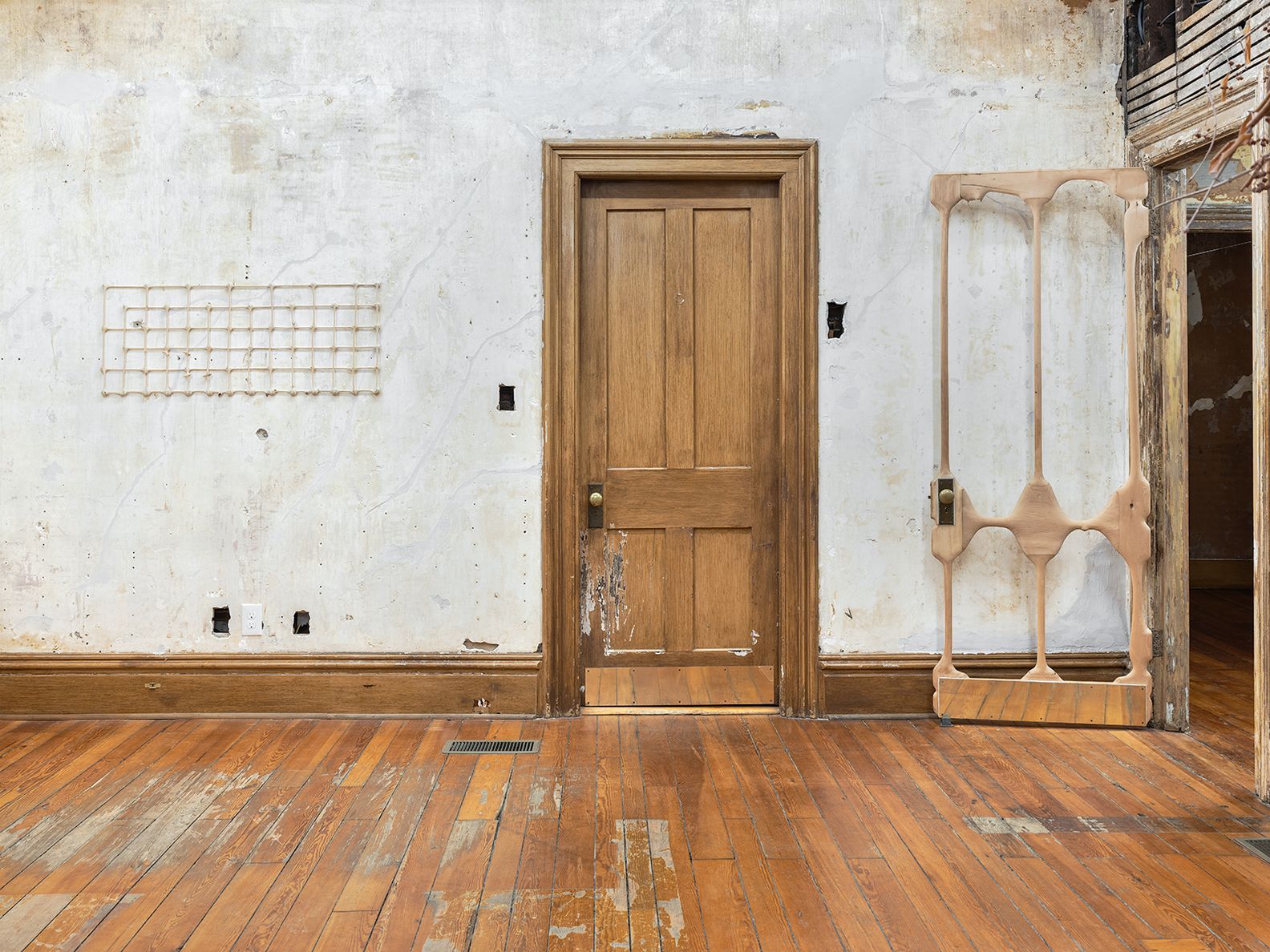
We returned to Cleveland in the summer of 2023 and moved into a vacant 1857 two-story Italianate house on Pearl Road, a major corridor through the city’s west side. Our family lives upstairs, undertaking the slow preservation of a structure that was progressing toward advanced stages of decomposition. We opened the grounds and first floor to public access, inviting artists to visit, stay, intervene, and experiment.
In my experience as an artist in Cleveland over the years, things on the institutional side have been reliably safe and old-fashioned. And there’s currently nothing like the vibrant, radical, underground art scene that existed in Tremont in the 1990s.
If you’ve applied for local or state funding as a Cleveland artist, you know that funders have largely discarded artist benefit in favor of community impact. The two aren’t necessarily mutually exclusive, but to get money, artists are expected to entertain and educate the public, or decorate the city. There is little recognition that artists doing their own thing—and being supported to do so—is itself an inherently beneficial form of community impact. Institutions that were once deeply tied to the community, providing meaningful support for artists, have become corporatized and increasingly distant from the artists they once served.
SHED has committed to experimentation and disruption. We see the city’s institutional limitations not simply as a problem, but as an opening for artists to make their own rules, build their own structures, and see what happens when we don’t await permission from above.
What does it mean to experiment?
The words experience and experiment share the same Latin root, experimentum: a trial, test, proof. In the Middle Ages, before modern distinctions between science and magic, it could also describe a feat of magic, an act of sorcery, or a magical spell.
What states of mind and being bring experimentation, and how do we devise its methods? What conditions set it off? An experiment encounters the unknown, fucking with the known in the process.
Opening doors before we know what’s on the other side.
It’s how we landed in this house.
It’s what’s behind her slow undressing and our getting to know her intimately. Finding that she wants us to reach out and touch what’s underneath, to live among her systems—pathological, neurological, reproductive, metabolic. To expose one among another. Our home is not private property, but a socially developed organism with many creators, bearers, and caretakers. A home for artists and ideas.
What does it mean to care? To show tenderness. Experiments imply care—care for going deeper, care for rearranging the world, care for ideas and where they lead us.
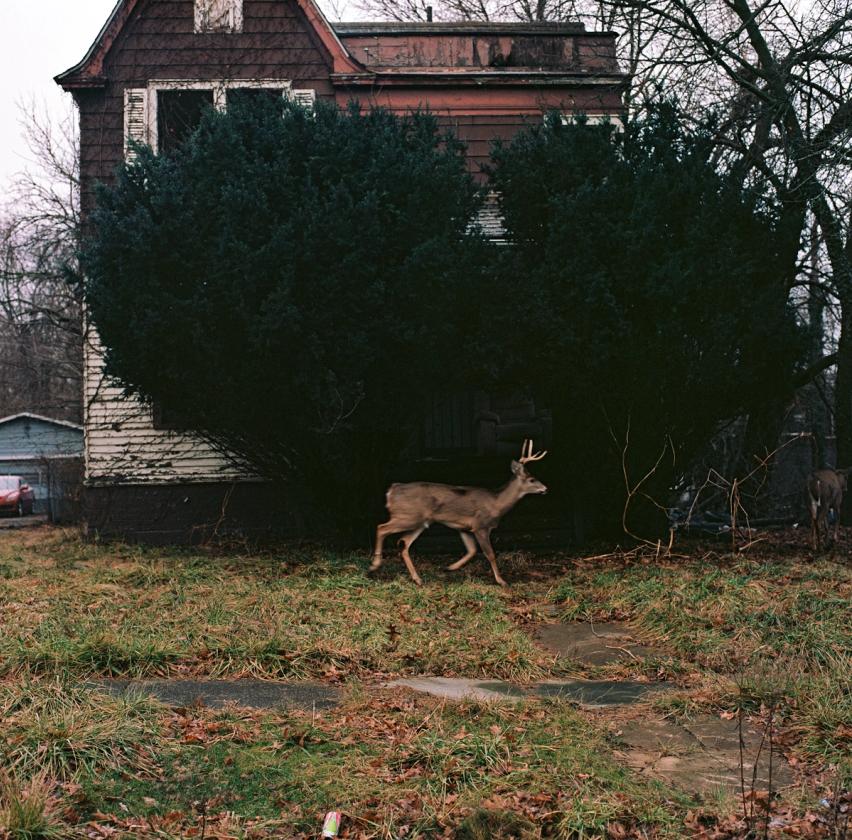
Last fall, artist Travis Morehead and I transformed the house into a musical instrument, threading harp strings through the lowered upper sashes of her double-hung, weight-and-pulley windows. The strings stretched to the property boundaries, where we bowed them. Two wasps’ nests suspended in her rooms carried the vibrations inside. We couldn’t hear the music, only watch each other’s movements across the lawn in the hazy dusk.
In 2026, SHED Projects completed its Anti-Strategic Plan.
The plan puts language to the conditions of true experimentation. It insists that our labors are points of philosophical, spiritual, and emotional inquiry.
The Anti-Strategic Plan takes into account the soft edges between public and private space, at times anticipating the total flooding of one into the other. It addresses permeability itself as a strategic tool, modeling the family home as a public cultural institution with defining principles and behaviors, including trust, care, openness to uncertainty, and creating space for discomfort.
While Gabi was at Mardi Gras, as a grand romantic gesture for her return, I hung 44 paintings I made over a decade but had never shown anyone. She loved them so much that she opened the show to the public. We called it If you receive a love letter from me you are fucked forever. Some of the works were explicit nudes, so she moved those into our bedroom. We sat in bed for a conversation about the paintings. The public joined us in our bedroom for milk and cookies.
Like any SHED project, the plan pushes the limits of form and resists containment, more a radical manual for occupying nonprofit art administration from home than a document for institutional development. It models how artists might form and leverage establishments to do things that are inherently anti-establishment. Considering possibility and permanence systemically, the plan rejects the point of least resistance, demanding slowness, denying systemic procedure rather than adapting to its conditions.
This approach of opening doors without knowing what’s on the other side has become essential. It has to do with relying on intuition and fearlessness when moving through the world, being curious along the way. It’s what Cleveland now demands of artists: to gather without expectation, to embrace mystery, to go deep and see what things are really made of.
Go far out. Forget the galleries and their Costco cheese platters. Turn away from the marketplace, forget the wall didactics and artist statements, and community impact assessments.
The city is filled with wonder. We only have to care enough to pay attention.
